


How to Say Coffee in Vietnamese: A Founder’s Guide to Origin, Science, and Sourcing
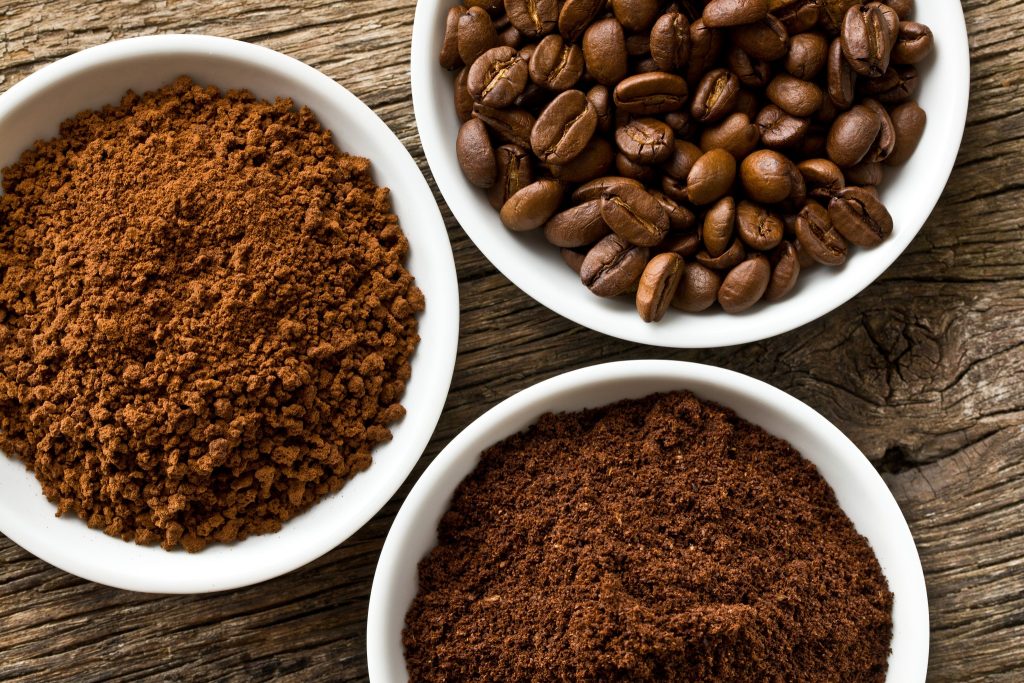
Building a coffee brand around Vietnamese origin means eventually looking past the marketing language and understanding the country on its own terms, starting with something as simple as how to actually say the word. That understanding doesn’t stay simple for long. It leads into the science behind why a specific highland region produces a specific flavor, the technical processes that turn a cherry into a cup, and eventually into the practical questions a founder needs to ask before committing to a sourcing partner. This guide walks through that full arc, from language to science to the sourcing decisions that actually determine what ends up in your bag.
How to Say Coffee in Vietnamese: A Linguistic Gateway to Origin
Cà Phê — Word Origin and Pronunciation
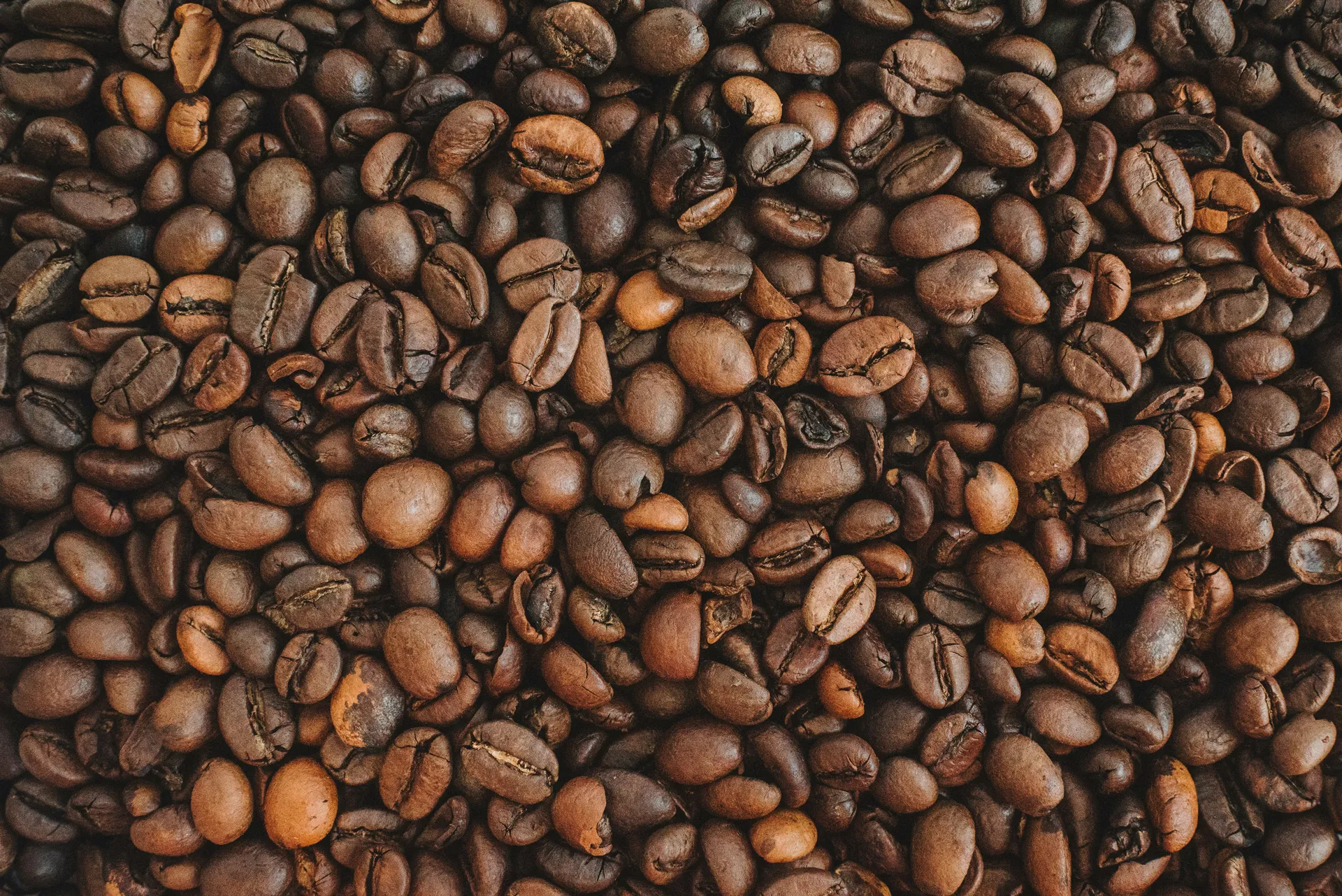
The Vietnamese word for coffee, cà phê, is a direct phonetic borrowing from the French café, introduced during the colonial period when coffee cultivation first arrived in the country. Pronunciation follows Vietnamese tonal rules rather than French ones: cà carries a falling tone, phê a level tone, and getting both right matters more than English speakers might expect, since Vietnamese is a tonal language where the same syllable can carry entirely different meanings depending on pitch. For a founder working directly with farmers, processors, or factory staff in Vietnam, even an approximate, respectful attempt at correct pronunciation tends to open conversations more easily than defaulting to English throughout a visit.
Cà Phê — Word Origin and Pronunciation
Common Terms Every Buyer Should Recognize
Beyond the base word, a handful of compound terms come up constantly in any real sourcing conversation in Vietnam. Cà phê phin refers to the traditional Vietnamese drip filter and, by extension, coffee brewed that way. Cà phê sữa đá describes iced coffee with condensed milk, the country’s most recognizable everyday drink. Cà phê rang xay means roasted and ground coffee, cà phê hòa tan refers to instant coffee, and cà phê nhân xanh specifically means green, unroasted coffee beans, the term most relevant to a buyer sourcing raw material rather than a finished product. Recognizing these terms doesn’t just help with ordering a drink, it helps a founder follow along more naturally during a factory tour or farm visit where staff may default to Vietnamese terminology for the technical side of the business even while speaking English generally.
Regional Variations and Everyday Usage
Vietnam’s linguistic landscape is not entirely uniform, and the pronunciation of cà phê can shift subtly depending on region. In the north, around Hanoi, the tones tend to be crisper, while southern pronunciation in and around Ho Chi Minh City softens certain vowel sounds. Despite these regional inflections, the written form remains consistent nationwide, which is helpful for anyone learning how to say coffee in Vietnamese for business purposes rather than casual conversation.
Street vendors, café owners, and factory staff alike use the term constantly throughout the day, embedding it into daily rituals that range from the iconic slow-drip cà phê phin served at sidewalk cafés to the more modern instant sachets consumed by commuters. This everyday ubiquity reflects coffee’s deep integration into Vietnamese social life, far beyond its role as an export commodity.
A Brief History of Coffee’s Arrival in Vietnam
French Colonial Introduction
Coffee arrived in Vietnam in 1857, brought by French colonists who first experimented with cultivation in the northern provinces before recognizing that the climate and soil of the Central Highlands were far better suited to the crop. This colonial origin is part of why the word cà phê itself borrows directly from French, and why coffee cultivation in Vietnam has always been oriented toward export from its earliest days rather than developing first as a domestic tradition the way it did in some other origin countries.
Post-War Robusta Expansion
Vietnam’s transformation into a coffee export powerhouse happened considerably later than the crop’s initial introduction, accelerating after the Đổi Mới economic reforms beginning in 1986 opened the country to market-oriented agricultural expansion. Robusta cultivation spread rapidly across the Central Highlands during this period, and within a few decades Vietnam moved from a minor coffee producer to the world’s largest exporter of Robusta specifically, a position it continues to hold today.
The Modern Specialty Movement
More recently, a genuine specialty coffee movement has taken hold within Vietnam’s broader industry, driven by improved processing methods, Fine Robusta grading standards, and a new generation of producers and roasters treating Vietnamese coffee as a category capable of real differentiation rather than only bulk commodity output. This shift has changed what’s realistically available to founders sourcing from Vietnam today compared to even a decade ago, opening up lot-specific, traceable, specialty-grade options that simply weren’t part of the conversation in the industry’s earlier, volume-first decades.
The Terroir of Măng Đen: Why Altitude and Volcanic Soil Matter
Altitude and Temperature Swing
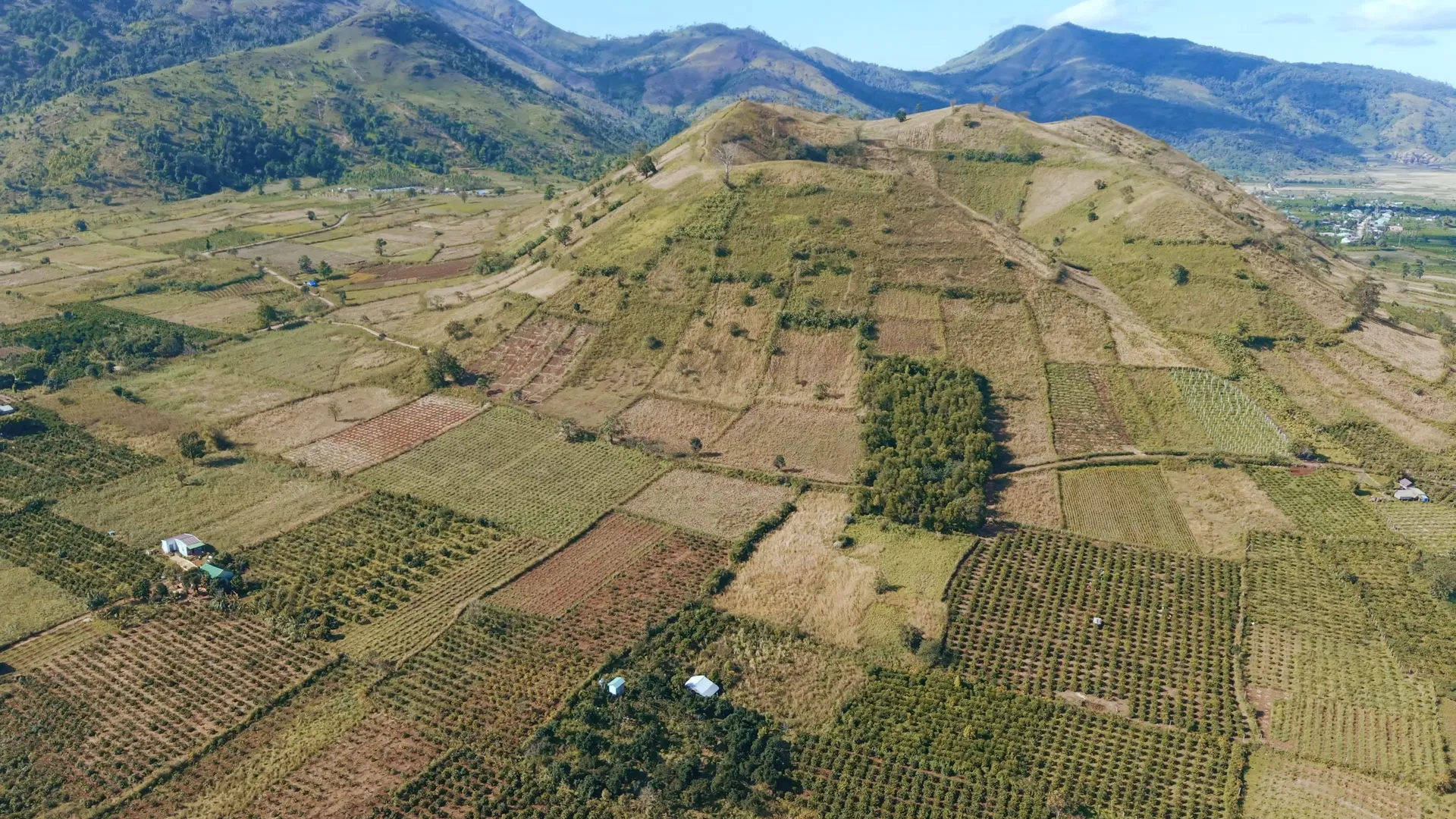
Măng Đen sits at an elevation of roughly 1,300 meters within Kon Tum province, high enough to produce a meaningful swing between daytime and nighttime temperatures. This kind of diurnal temperature variation is one of the more consistently cited factors behind complex coffee flavor development, since cooler nights slow a cherry’s ripening process, generally allowing more time for sugars and acids to develop fully compared to the faster ripening cycles typical of lowland, consistently warm growing conditions.
Altitude and Temperature Swing
Volcanic Soil Composition
The Central Highlands, including the Kon Tum region, sit on volcanic basalt soil, generally rich in minerals including iron and magnesium that support healthy plant development and are commonly associated with distinctive flavor characteristics in the resulting coffee. This volcanic soil profile is part of the broader reason the Central Highlands became Vietnam’s coffee-growing heartland in the first place, and it’s a genuine geographic asset behind any origin story built around this specific region.
CQI Green Bean Scoring: The Science Behind Quality Grading
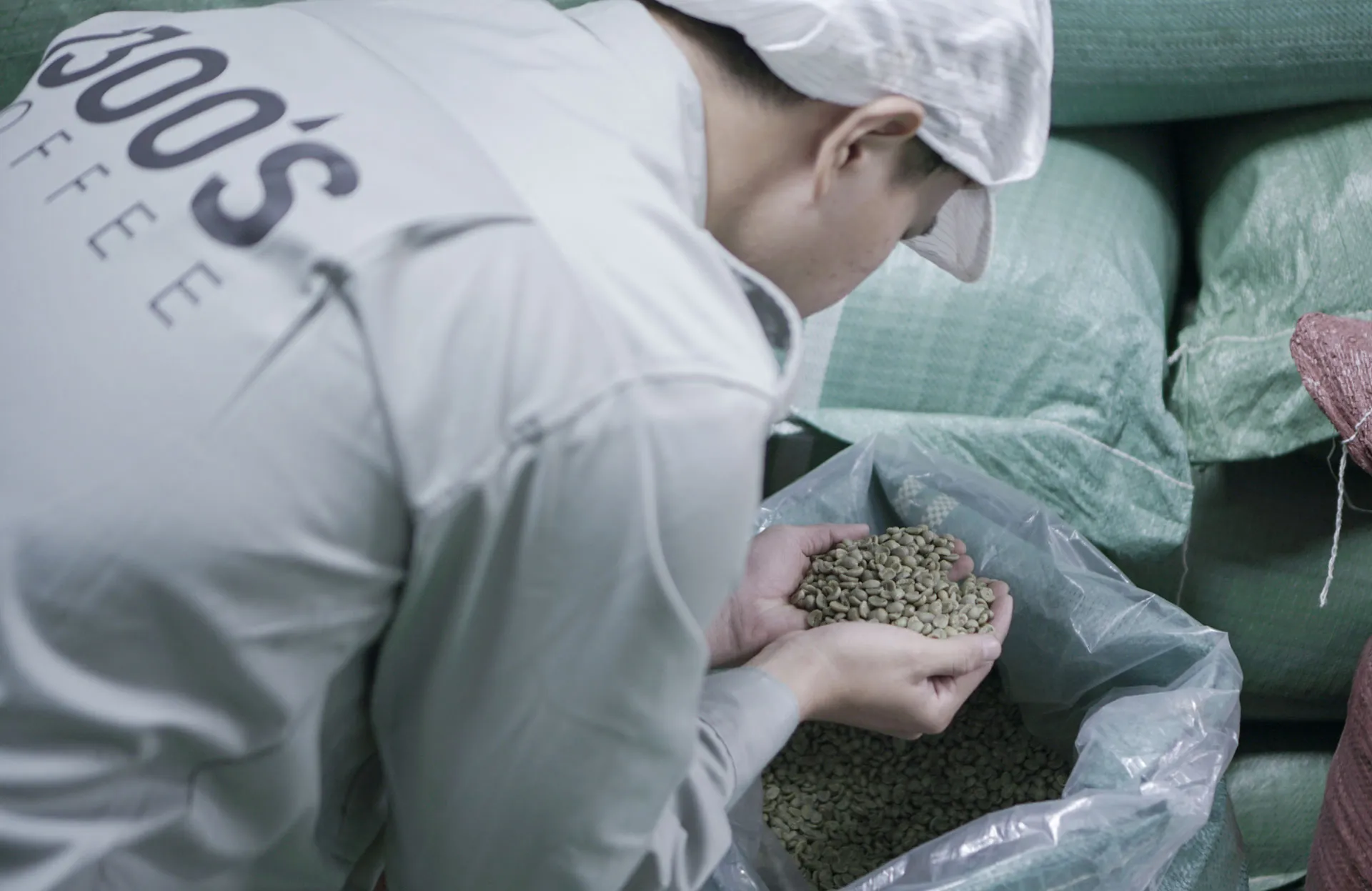
Before any bean reaches roasting, it must pass rigorous evaluation. We apply 100% CQI (Coffee Quality Institute) scoring protocols through our partnership with Stone Village Lab, ensuring every lot is assessed against internationally recognized standards for aroma, flavor, acidity, body, and defect count.
This scientific grading process is essential for any specialty coffee supplier seeking to build trust with international buyers. Rather than relying on subjective tasting alone, CQI scoring provides a quantifiable, repeatable benchmark that allows procurement managers to compare lots across harvests and regions with confidence. Buyers who understand both the science of grading and how to say coffee in Vietnamese are better equipped to engage directly with quality control teams during cupping sessions and lab visits.
Nitrogen Flushing and Ultrasonic Sealing: Preserving Aroma at the Molecular Level
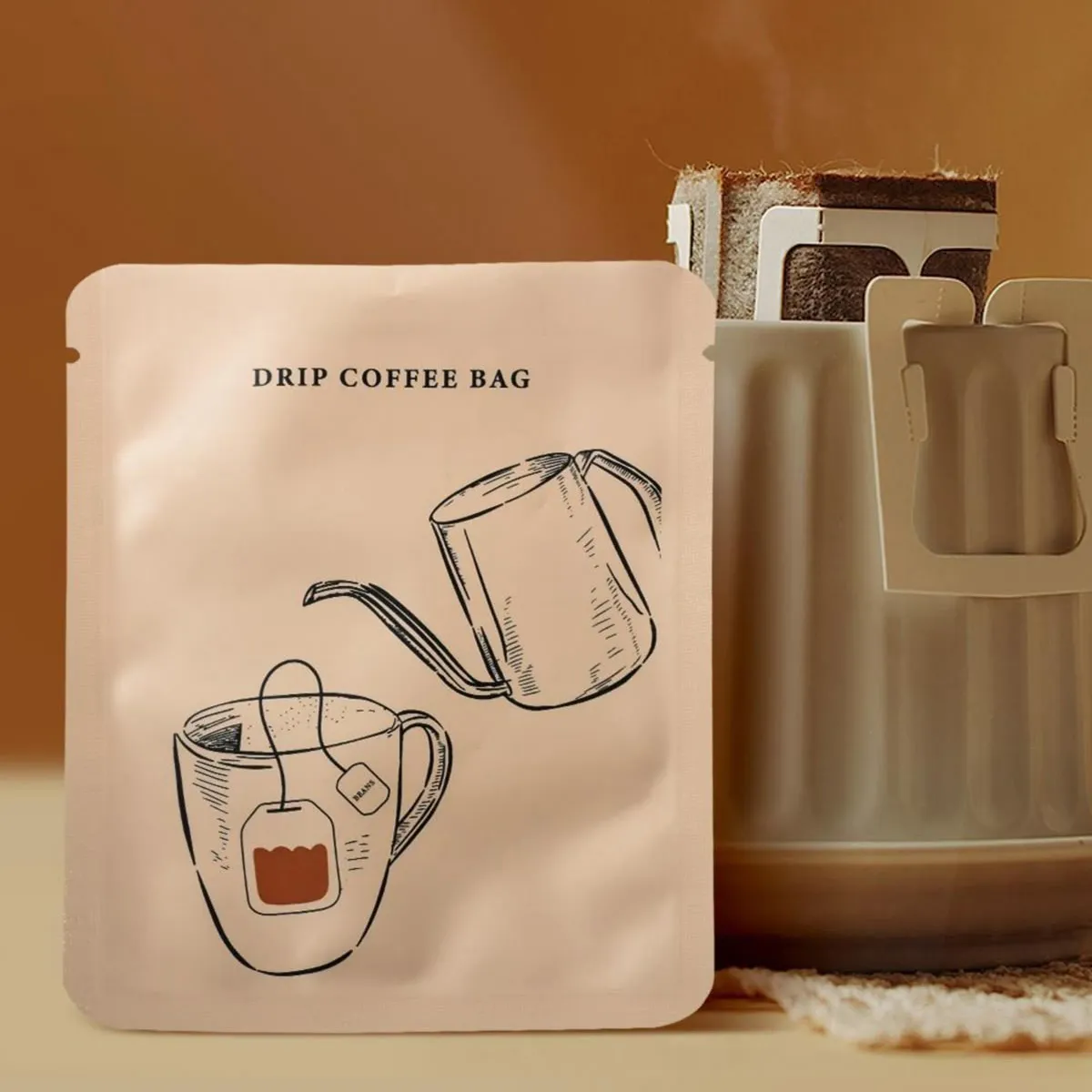
Once beans are roasted and ground, the greatest threat to quality becomes oxidation. Coffee’s volatile aromatic compounds degrade rapidly upon exposure to oxygen, which is why we employ nitrogen flushing during packaging, reducing residual oxygen levels to below 1%. This near-inert atmosphere significantly slows staling, preserving the flavor integrity of drip bags and ground coffee from the moment of packaging through the point of consumption.
Complementing this process, our glue-free ultrasonic sealing technology uses high-frequency vibration to fuse packaging materials without adhesives or chemical residues. This method creates a tighter, more consistent seal than traditional heat sealing, which is particularly critical for single-serve drip bag formats where moisture ingress can compromise freshness. Together, nitrogen flushing and ultrasonic sealing represent the kind of advanced preservation science that any serious drip coffee supplier must master to compete in export markets.
Freeze-Drying vs Spray-Drying: Crystal Processing for Instant Coffee
Freeze-Drying Process
Freeze-drying involves brewing concentrated coffee, freezing it solid, then removing the ice through sublimation under vacuum, a slower and more energy-intensive process than standard drying methods. Because it skips the high-heat exposure other drying methods rely on, freeze-drying preserves more of coffee’s volatile aromatic compounds, producing the larger, irregular crystal structure and stronger aroma associated with premium instant coffee positioning.
Freeze-Drying Coffee
Spray-Drying Process
Spray-drying, by contrast, involves atomizing concentrated coffee liquid into a chamber of hot air, causing near-instant evaporation that leaves behind fine coffee powder. This process is considerably more cost-efficient at scale and remains the dominant method behind most commercial and value-tier instant coffee production globally, including the large majority of Vietnam’s instant coffee export volume.
Why Understanding This Science Helps You Ask the Right Sourcing Questions
Language, terroir, and processing science aren’t separate interests from the business of sourcing, they’re what allow a founder to ask sharper, more specific questions once an actual supplier conversation begins. A founder who understands what altitude and volcanic soil actually contribute to flavor can ask a prospective supplier pointed questions about a lot’s specific growing region rather than accepting a vague origin claim. A founder who understands cupping score and defect count can request lot-specific grading data rather than a general quality assurance. And a founder familiar with the real difference between freeze-drying and spray-drying can confirm exactly which process a supplier is quoting for an instant coffee formulation, avoiding a mismatch between what’s expected and what actually gets delivered. This is where the earlier sections of this guide connect directly to the practical sourcing decisions covered next.
Choosing a Specialty Coffee Supplier: What Brand Founders Should Evaluate
Selecting the right manufacturing partner requires more than comparing price sheets. Brand founders entering specialty coffee wholesale relationships should evaluate a supplier’s traceability systems, certification portfolio, and production capacity. Full export compliance, including ISO 22000, HACCP, FDA, and EUDR certification, is non-negotiable for brands intending to sell into regulated markets such as the European Union or the United States.
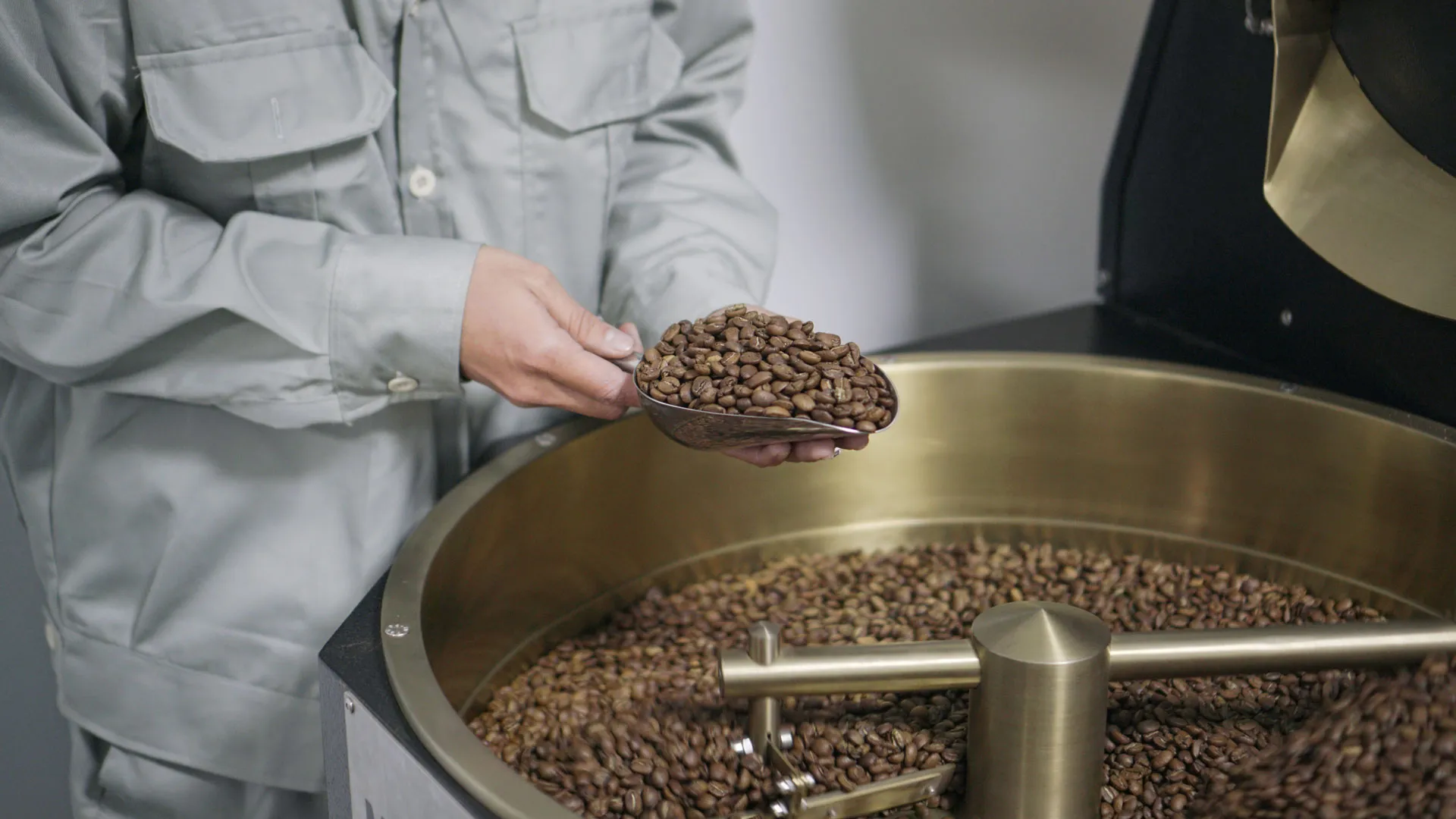
Equally important is technical transparency. A trustworthy instant coffee supplier or drip coffee supplier should be able to explain, in detail, how roast curves are digitally logged, how green beans are scored, and how packaging technology protects shelf life. This level of scientific rigor distinguishes a genuine manufacturing partner from a commodity trader.
From Bulk Beans to Private Label: Working with Private Label Coffee Suppliers
Many emerging brands begin their journey seeking bulk green coffee beans or industrial coffee extracts, only to discover that scaling into a finished, branded product requires an entirely different set of capabilities. This is where private label coffee suppliers add substantial value, offering turnkey solutions that span sourcing, roasting, packaging, and compliance documentation under a single roof.
Our 10,000-ton capacity factory allows us to serve as both a bulk instant coffee wholesale partner for large-volume buyers and a bespoke OEM/ODM manufacturer for boutique roasters developing signature blends. Whether a client requires coffee roasters wholesale for their café chain or a fully packaged drip bag line for retail shelves, the underlying principle remains the same: consistency achieved through scientific process control, not guesswork.
Conclusion
Understanding how to say coffee in Vietnamese, cà phê, is a small but meaningful entry point into a much larger story: one of high-altitude terroir, rigorous quality science, and advanced processing technology that together define modern specialty coffee manufacturing in Vietnam. From CQI-scored green beans grown in the forests of Măng Đen to nitrogen-flushed drip bags and freeze-dried instant coffee crystals, every stage of production reflects a commitment to preserving origin character while meeting the demands of international commerce.
Whether you are a procurement manager preparing for your first sourcing trip or a brand founder mapping out a private-label launch, taking the time to learn how to say coffee in Vietnamese, along with the terminology surrounding processing, roasting, and packaging, can meaningfully deepen your working relationships with origin partners. Language, after all, is often the first bridge between curiosity and genuine collaboration. For coffee roasters and brand founders seeking a knowledgeable, vertically integrated partner, we invite you to explore what a true farm-to-cup manufacturing relationship can offer.


1300s BLOG YOU MAY ALSO BE INTERESTED IN
7 Things Every Importer Should Know Before Choosing an Instant Coffee Manufacturer
Roasted Coffee Beans Suppliers Delivering Wholesale Volume to Cafes and Retailers
The Rise of Vietnam’s Specialty Coffee Industry