




The Ultimate Guide to Finding Reliable Wholesale Green Coffee Suppliers
Finding reliable wholesale green coffee suppliers is less about locating names and more about learning to tell a dependable partner from a convincing website. The market is crowded with companies that describe themselves as direct, specialty, and traceable, and the differences between them only become visible once you know where to look and what to test. A wrong choice rarely announces itself at the first sample. It appears in the second or third shipment, when quality drifts, communication slows, and the container that was supposed to match your approved lot does not. This guide walks through the full process of finding a supplier, from understanding who actually sells green coffee, to building a shortlist, evaluating samples, reading contracts, and spotting warning signs, so that your next sourcing decision rests on a structured method rather than on instinct.
Understanding the Different Types of Wholesale Green Coffee Suppliers
Before searching, it helps to know who you are actually looking for. Green coffee reaches buyers through several different kinds of businesses, and each offers a different balance of price, traceability, and convenience.
Producers and Cooperatives Selling Direct to Buyers
Producers and cooperatives sell coffee they grew themselves, which gives them the deepest knowledge of any lot and the clearest traceability. Buying direct can mean better information and more of your payment reaching the people who grew the coffee, but it also means taking on more of the logistics, since export documentation, shipping, and quality control then fall to you or to an intermediary you hire. Smaller producers may also lack the volume to supply a full year of consistent product. A few suppliers combine direct farm management with export capability. 1300’S Coffee, for example, manages its coffee from the soil through to harvest, publishes harvest output and stock after each season, and takes advance orders, which gives buyers many of the benefits of direct sourcing without having to organize the export side themselves.

Producers and Cooperatives Selling Direct to Buyers
Exporters and Processing Mills Preparing Beans for Shipment
Buyers frequently search for green coffee beans manufacturers, although strictly speaking green coffee is processed rather than manufactured. What the phrase really points to are the exporters and mills that turn harvested cherries into export ready beans through hulling, sorting, and grading. This layer matters because a supplier may own its mill, partner with one, or simply purchase from several, and each arrangement affects how much control the supplier has over quality. 1300’S Coffee, for instance, works with a partner processing facility for green bean processing, with the quality discipline set on the farm continuing through the mill. Whichever model a supplier uses, ask them to describe it plainly. Exporters with real control over processing can usually explain exactly how lots are sorted, graded, and blended.
Importers and Trading Companies Serving Smaller Volumes
Importers and trading companies buy from producers and exporters, hold inventory in the destination market, and sell in smaller quantities with shorter lead times. They suit buyers who need flexibility, want to avoid long shipping schedules, or cannot meet container minimums, which for a full container load means roughly twenty tons. The tradeoff is price and distance from the source, since every intermediary adds margin and information tends to thin out with each step. A good trading company compensates with consistency, curated selection, and reliable logistics, so the useful question is not whether an intermediary is good or bad but whether the information and service it adds is worth the cost to your particular business.
Where to Start Your Search for Reliable Suppliers
Knowing the supplier types makes the search itself more efficient. Two broad approaches work well, and most buyers end up using both.
Trade Shows and Industry Networks Worth Visiting
Trade shows and industry associations remain the most dependable places to meet suppliers face to face, taste samples on the spot, and see how a company presents itself in real conversation. Meeting a supplier in person reveals things a website cannot, including how knowledgeably they discuss their own coffee and how they respond to difficult questions. Industry networks add another layer, since peers in your own market can tell you which suppliers have delivered consistently and which have not. Referrals from other buyers are often the single most valuable source, because they arrive with a track record already attached.
Online Marketplaces and Direct Outreach to Suppliers
Online directories and marketplaces list thousands of green coffee bean suppliers and make it easy to compare basic offers, but they are better treated as a source of names than a source of judgments. Listings are usually self reported, and a polished profile says little about actual performance. Once a name looks promising, reach out directly with a specific request, such as a lot specification, a target volume, and a timeline. The quality of the reply is informative. Suppliers who answer with specifics and ask relevant questions about your needs are usually experienced, while those who send a generic price list in response to a detailed inquiry are showing you how they are likely to operate later.
Building a Shortlist You Can Actually Evaluate
A shortlist of three to five suppliers is usually enough. Fewer leaves you without a meaningful comparison, and more makes thorough evaluation impractical. Screen candidates on four practical points before spending time on samples. First, origin fit, meaning whether the supplier genuinely offers the type of coffee you need rather than a loosely related one. Second, volume fit, meaning whether their capacity matches your ordering pattern both now and as you grow. Third, documentation, meaning whether they can supply the certifications and export paperwork your market requires. Fourth, communication, meaning whether replies are prompt, specific, and consistent.
If your product is positioned as specialty, narrow the list further to suppliers who behave like a genuine specialty coffee supplier, which means they can provide lot specific cupping data, name their sources, and explain their processing in detail. A supplier that offers specialty positioning at commodity pricing without documentation is asking you to accept a claim rather than verify one. At this stage a structured set of questions, sent identically to every candidate, makes the comparison far easier and keeps the process fair.
Evaluating Quality Before You Commit to Volume
Samples and trial orders are where marketing meets reality. Handled carefully, they protect you from nearly every costly surprise.
Samples That Truly Represent the Shipment
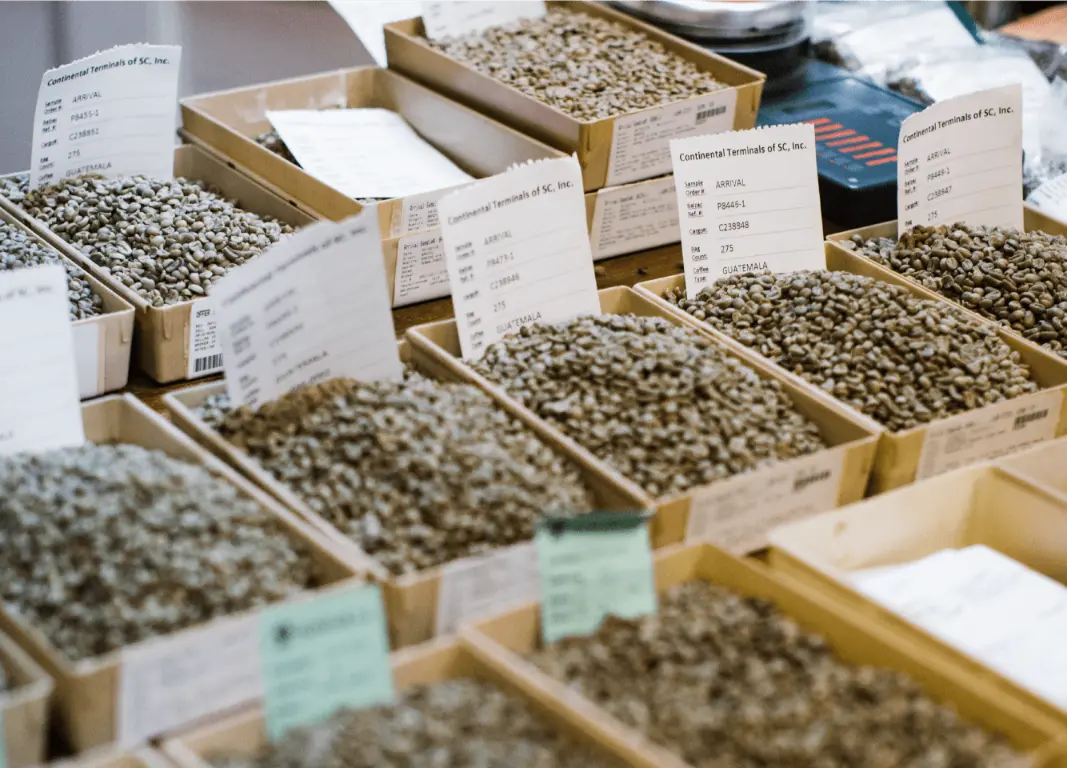
Request samples from the actual lot you intend to buy rather than from a reference batch. Evaluate them yourself, roasting and cupping according to your own standards, instead of relying only on the supplier’s scores. Check screen size, defect count, moisture, and aroma in the raw beans, then compare the roasted results against what the supplier described. Keep a retained sample from each evaluation, since this becomes the reference point against which later shipments can be judged. For buyers building a specialty coffee wholesale program, this step is especially important, because the premium you pay only makes sense if the quality you cupped is the quality that ships.
Samples That Truly Represent the Shipment
Trial Orders Before Longer Contracts
A trial order is a small first shipment placed before any larger commitment. It tests the entire chain at modest cost, from communication and documentation to packaging, shipping time, and arrival quality. Compare the arrived coffee against the approved sample and review how the supplier handled any problems, however small. A supplier who resolves a minor issue quickly and transparently is demonstrating exactly the behavior you will depend on later. Only after a trial order meets expectations does it make sense to discuss longer contracts or larger volumes.
Understanding Pricing and Contract Structures
Price matters, but it only has meaning once you understand what sits behind it and what the contract actually commits you to.
What Actually Drives the Price of Green Coffee
Green coffee prices reflect the global futures market, the specific origin and quality grade, the processing method, the volume, and the timing within the crop year. Specialty grade lots carry a premium over commodity grade because they require more labor, more careful processing, and more verification. Freight, insurance, and currency movements add further variation. Understanding these components helps you recognize when a quote is unusually low, which usually signals a tradeoff somewhere, such as a lower grade, an older crop, or hidden costs, and when a premium is justified by genuine quality or service.
Fixed Price Versus Market Linked Contracts
Fixed price contracts set the price for a defined volume and period, giving certainty at the cost of flexibility if markets move in your favor. Market linked contracts reference the futures price plus or minus a quality differential, which follows the market in both directions. Neither is universally better. Buyers who need stable budgets for retail products often prefer fixed pricing, while those who can absorb volatility may prefer to follow the market. Whichever you choose, confirm in writing what happens to the price if the delivery date shifts or the quantity changes.
Payment Terms and Shipping Basis
Common payment structures include a deposit with the balance against shipping documents, or a letter of credit for larger or newer relationships. Shipping basis matters just as much. FOB prices leave freight and insurance to you, while CIF prices include them, so comparing quotes on different bases without adjusting can be misleading. If your coffee will be roasted and packed by a contract partner such as a ground coffee supplier, coordinate delivery windows with that partner before finalizing terms, since a delay at either end can leave coffee waiting in a warehouse at your expense.
Red Flags That Should Slow Down Any Deal
Some warning signs deserve to be taken seriously regardless of how attractive an offer looks. Reluctance to name the origin or source of a lot suggests either poor records or something the supplier would rather not discuss. Samples that cannot be matched to the shipment lot, or that arrive only after repeated requests, point to weak internal control. Prices far below market are almost never a bargain, since the difference has to come from somewhere. Pressure to pay the full amount upfront, particularly from a new supplier, shifts all of the risk onto you. Missing or inconsistent documentation is another serious signal, because it can cause delays at customs that cost far more than any saving on price.
Communication patterns matter as well. Among the many green coffee bean suppliers you might contact, those that respond promptly, answer the question you actually asked, and put terms in writing are the ones most likely to behave the same way after the sale. If a supplier becomes vague or evasive when you ask for specifics, treat that as information about how problems will be handled later.
Matching a Supplier to the Product You Plan to Make
The right supplier also depends on what the green coffee will eventually become, since each format places different demands on the raw material.
Roasted and Ground Products That Depend on Consistency
Businesses building a roasted coffee wholesale line need green coffee that roasts evenly and performs consistently from shipment to shipment, which makes defect counts, screen size, and moisture the key points to verify. A roast profile built around one lot rarely transfers cleanly to another, so a supplier’s ability to deliver the same specification repeatedly is worth more than any single impressive sample. Buyers who plan to sell coffee ground for specific brewing methods should also consider how bean density and size will affect grind consistency.
Soluble and Instant Products Built on Volume
Manufacturers building an instant coffee wholesale offering usually work with Robusta and care about yield, extraction behavior, and stable volume at a predictable cost. For this format, supply commitment and pricing structure often matter as much as cupping scores. Confirm that the supplier can commit to the volume you need across the season and can deliver consistent quality at the scale soluble production requires.
Getting Started
Finding reliable wholesale green coffee suppliers is a process of narrowing, testing, and verifying rather than a single decision. Begin by deciding which supplier type suits your needs, build a shortlist, evaluate real samples, and prove the relationship with a trial order before you commit to volume. The time spent on this process is small compared with the cost of correcting a poor choice after a full container has arrived. Looking for a supplier that publishes its harvest figures and answers your questions directly? Contact 1300’S Coffee to request samples and the current availability from the farm.
Read more: Why 1300’S Coffee Is the Green Bean Coffee Supplier You Need to Know


1300s BLOG YOU MAY ALSO BE INTERESTED IN
The Complete Guide to Choosing Gourmet Coffee Suppliers for Coffee Brands and Importers
What Is a Specialty Coffee Roaster How It Differs From a Standard Roaster
OEM Specialty Coffee: A Complete Guide for Coffee Brands