



Coffee Beans Distributors Supplying Roasters and Retailers Across Global Markets
Coffee beans distributors occupy a different position in the supply chain than the manufacturers and bulk exporters most sourcing guides focus on. A manufacturer or large exporter is built for full-container volume and a single delivery per order cycle. A distributor is built for something closer to the opposite: smaller, more frequent replenishment orders, spread across many roasters and retailers who don’t each need, or want to manage, a full container of coffee arriving at once. This guide looks at what that distribution model actually involves operationally, how it compares to importing directly, what roasters and retailers should evaluate before committing to a distributor relationship, and what’s involved in becoming a distribution partner rather than a one-time buyer.
What a Coffee Beans Distributor Actually Does
The distinction matters because it changes what a buyer should expect from the relationship. Coffee bean providers is a broad term covering manufacturers, exporters, brokers, and distributors alike, so it’s worth being specific about where a distributor sits within that group. Unlike a coffee bean manufacturer developing and producing a formulation from scratch, a distributor typically holds inventory of already-produced coffee, whether sourced directly from a manufacturer or an exporter, and breaks that supply down into smaller, more frequent shipments suited to a roaster’s or retailer’s actual consumption pace.
What a Coffee Beans Distributor Actually Does
Operationally, this involves three functions most buyers don’t think about until they need them. First, warehousing: a distributor holds physical stock in or near the destination market, absorbing the lead time and minimum order size that direct import from origin requires. Second, order fragmentation: breaking a full container, which might run 19 to 21 tons for a standard 40-foot container of green coffee, into order sizes that match what an individual roaster or retailer actually needs on a monthly or quarterly basis, often a few hundred kilograms to a few tons at a time. Third, financial intermediation: many distributors offer payment terms, net 30 or net 60 for example, that a direct-from-origin import relationship, which typically requires payment before or at shipment, generally doesn’t extend to a new buyer.
This model solves a specific problem. A mid-sized roastery might use two or three tons of green coffee a month, far below the volume that makes sense to import directly in full-container quantities with the lead times and warehousing that requires. A distributor absorbs that complexity, holding stock and shipping smaller quantities on a schedule that matches the buyer’s actual usage, often with more flexible payment terms than a direct-from-origin import relationship would offer.
Direct Import vs Buying Through a Distributor
Whether a roaster or retailer should import directly from origin or buy through a distributor depends heavily on volume, and the tradeoffs are concrete enough to lay out directly.
| Factor | Direct Import | Buying Through a Distributor |
|---|---|---|
| Typical minimum order | Full container (roughly 19-21 tons) | A few hundred kilograms to a few tons |
| Lead time | Weeks to months, depending on origin and shipping schedule | Days to a couple of weeks, since stock is already in-market |
| Price per unit | Generally lower, since no distributor margin is added | Higher per unit, reflecting warehousing, financing, and service |
| Payment terms | Often required upfront or at shipment | More flexible, frequently net 30 or net 60 |
| Documentation and customs handling | Buyer’s own responsibility | Handled by the distributor |
| Grading transparency | Direct access to lot-specific data from the producer | Depends on how much data the distributor passes through |
Buyers using more than roughly one container’s worth of coffee per year and able to manage the logistics, warehousing, and upfront payment involved often find direct import more cost-effective over time. Buyers below that volume, or those who value the reduced logistics burden and payment flexibility more than the lower unit price, tend to be better served by a distributor relationship, even once volume would technically support container-level ordering.
Two Reasons Businesses Search for Coffee Beans Distributors
This keyword tends to cover two distinct groups of buyers with different goals, and it’s worth addressing both directly rather than assuming one interpretation.
Businesses Looking to Buy Through a Distributor
Roasters and retailers who need a reliable, recurring supply of coffee without managing direct import logistics themselves search for coffee beans distributors to handle sourcing, freight, customs, and warehousing on their behalf, in exchange for smaller order sizes and more frequent delivery than buying direct from an exporter would typically allow.
Businesses Looking to Become a Distributor
Some searches come from companies, importers, wholesalers, or regional trading businesses, interested in representing a specific coffee brand or origin in their market, buying larger volumes directly from the producer and then distributing to roasters and retailers within their own territory. This is a partnership opportunity rather than a one-off purchase, and it’s covered in detail later in this guide.
What Roasters Look for in a Coffee Beans Distributor
Roasters sourcing green coffee through a distributor generally prioritize a different set of criteria than a buyer importing a full container directly:
- Consistent access to both varietals. A roaster running a house blend typically needs both a reliable robusta coffee wholesale supply from established robusta coffee beans suppliers and an arabica coffee supplier relationship through the same channel, rather than managing two separate distributor relationships for each component.
- Smaller, more frequent order sizes, matched to actual roasting throughput rather than a fixed container minimum, since holding excess green bean inventory ties up capital and risks quality degradation before it’s used.
- Green bean wholesale options with real grading transparency, screen size, moisture, defect count, and crop year, even at smaller order volumes, since roasters building a specific flavor profile need this data regardless of how much they’re ordering at once.
- Specialty coffee wholesale access, for roasters building premium or single-origin offerings, since not every distributor carrying commercial grade volume also carries lot-specific specialty grade coffee with documented cupping data.
- Reasonable payment and credit terms, since smaller, more frequent orders often come with different financial arrangements than a single large import shipment paid upfront.
- Reorder predictability. A roaster planning production around a specific blend needs confidence that the same lot, or at minimum the same specification, will be available on the next reorder cycle, not a distributor whose inventory rotates unpredictably between different origins and grades.
What Retailers Look for in a Coffee Beans Distributor
Retailers, including specialty grocery, hospitality supply businesses, and multi-location café operations, evaluate distributors somewhat differently:
- Retail-ready packaging formats, whole bean and ground coffee in consumer or food-service ready packaging, rather than raw green beans requiring further processing.
- Reliability across many small drop shipments, since a retailer replenishing multiple locations needs a distributor capable of consistent, on-time delivery at a scale much smaller than a single bulk order.
- A track record with other roasters and retailers in the same market, since a distributor’s reputation among comparable businesses is often a stronger signal than marketing claims alone.
- Support identifying which coffee bean suppliers wholesale relationships stand behind the distributor’s inventory, since retailers increasingly want to know the sourcing story behind what they’re distributing to their own customers, not just a generic “imported coffee” label.
- Minimum order flexibility across a product range, since a retailer often needs to stock several SKUs, different roast levels or origins, at volumes too small individually to justify separate distributor relationships for each.
How the Distribution Relationship Works Operationally
Once a roaster or retailer selects a distributor, the relationship typically moves through a few recurring stages, and understanding this cycle helps set realistic expectations from the outset.
Onboarding and Initial Order
The buyer places a first order, generally smaller than a typical reorder, to evaluate quality, packaging, and delivery reliability before committing to a recurring schedule. This is the equivalent of a trial order in a direct import relationship, scaled down to distributor order sizes.
Forecasting and Reorder Cycles
Most distributor relationships settle into a rhythm, with monthly or quarterly reorders based on the buyer’s actual consumption rate. Buyers who can share rough forecasts in advance, even informally, tend to get more reliable allocation from a distributor during periods when supply is tighter, such as between harvest cycles.
Replenishment and Safety Stock
Reliable distributors typically maintain enough safety stock to absorb minor delays in their own upstream supply without disrupting a buyer’s reorder schedule. This is one of the more useful questions to ask directly during evaluation: how much buffer stock does the distributor typically hold relative to their average monthly distribution volume.
Communication During Supply Disruptions
Coffee is an agricultural product, and harvest timing, weather, and global price movements occasionally affect availability or lead time. A distributor’s communication during these periods, proactive notice versus buyers discovering a delay only when an expected shipment doesn’t arrive, is one of the clearer signals of relationship quality over time.
What to Look for in the Best Coffee Bean Suppliers Behind a Distribution Relationship
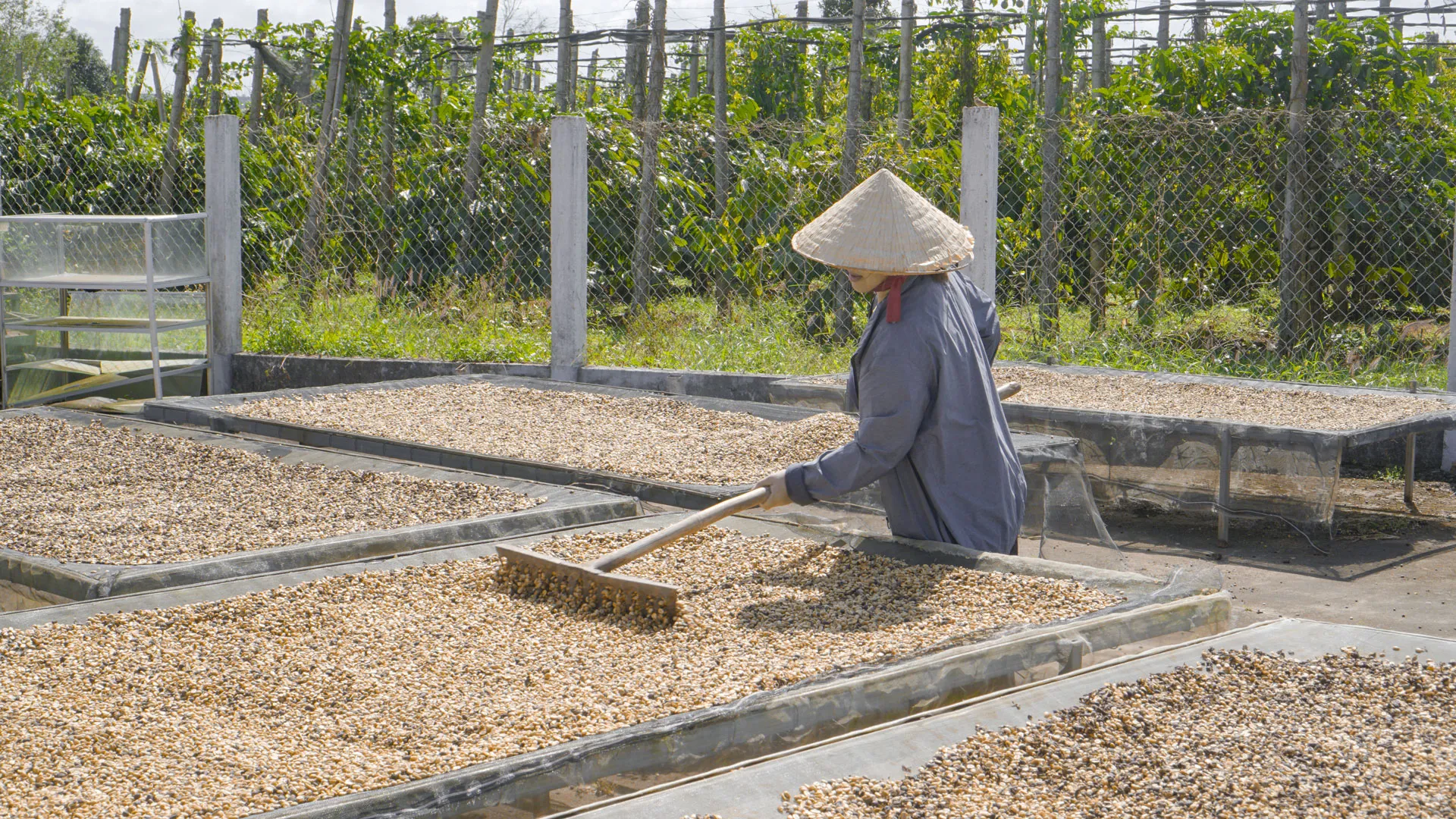
Whether working directly with a distributor or evaluating one that represents a specific origin, the same underlying question applies: who is actually producing the coffee, and how consistent is that production. The best coffee bean suppliers behind a distribution network typically share a few characteristics, direct sourcing control rather than buying from a fragmented pool of secondary traders, certifications appropriate to the destination market, and lot-level grading data that a distributor can pass through to roasters and retailers rather than a generic quality claim. A distributor is only as reliable as the production standing behind their inventory, which is why it’s worth asking a distributor directly which specialty coffee supplier or manufacturer they source from, rather than treating the distributor as the end of the traceability chain.
What to Look for in the Best Coffee Bean Suppliers Behind a Distribution Relationship
Common Mistakes When Choosing a Coffee Beans Distributor
A few recurring issues show up across first-time distributor relationships. Buyers sometimes select a distributor purely on price per kilogram without confirming grading consistency across reorders, only to find each shipment tastes noticeably different from the last. Others commit to a distributor without asking about safety stock levels or upstream supply reliability, then get caught off guard by a supply gap during a tight harvest period with no advance warning. A third common issue is treating the distributor as the full extent of the traceability story, when retailers and increasingly roasters need to answer questions about origin and sourcing that only the actual producer behind the distributor can fully address. Asking a distributor directly about grading consistency, safety stock policy, and which producer stands behind their inventory addresses all three of these before they become a problem.
Becoming a Regional Distributor: What the Partnership Involves
For businesses interested in representing 1300’S Coffee within their own market rather than sourcing a single order, the distributor partnership typically moves through a structured evaluation before formalizing terms.
- Initial conversation and market fit: The prospective distributor shares their target market, existing customer base (roasters, retailers, or both), and rough volume expectations, and 1300’S Coffee evaluates whether the territory and volume align with current production capacity and existing coverage in that region.
- Sample and trial order: As with any new sourcing relationship, the distributor typically starts with a trial order to confirm quality, packaging, and logistics work as expected before committing to a formal territory arrangement.
- Territory and volume commitment: Once both sides are confident in the working relationship, terms are formalized, defining the market or region a distributor covers and the order volume expected over a given period to maintain the arrangement.
- Pricing structure: Distributor pricing is generally tiered to reflect volume commitments compared to a one-off wholesale purchase, with better per-unit pricing available at higher committed volumes.
- Marketing and origin story support: Distributors representing 1300’S Coffee’s Kon Tum highland sourcing story to their own roaster and retailer customers receive documentation, photography, and origin information they can pass along to support their own sales and marketing.
- Ongoing communication on supply and crop timing: Distributors managing inventory for their own downstream customers get advance visibility into harvest timing and any potential supply changes, so they can manage their own customer communications proactively rather than reactively.
This is a meaningfully different commitment than a single wholesale order, and businesses considering it should expect a direct conversation about territory, volume expectations, and terms before formalizing the relationship.
How 1300’S Coffee Supports Distribution Partners
1300’S Coffee operates as a vertically integrated producer in the Mang Den highlands of Kon Tum province, supplying both green bean wholesale volume for roasters and finished, retail-ready formats for distributors serving retail and hospitality customers. The company supports both Arabica and Robusta sourcing, offers specialty coffee wholesale options backed by lot-specific cupping data from an in-house lab, and holds ISO 22000, HACCP, FDA, and OCOP certifications relevant to distributors operating across multiple export markets. For businesses considering a regional distributor partnership, direct sourcing control at origin means distributors can access consistent supply and clear documentation to support their own customer relationships, rather than working through additional intermediary layers between the farm and their warehouse.
Getting Started
Roasters and retailers looking to source through a distributor relationship should clarify order size, delivery frequency, and grading transparency requirements before committing, and should ask directly about safety stock and supply disruption communication before signing on for a recurring schedule. Businesses interested in becoming a regional distributor should be ready to discuss territory, expected volume, and how they plan to represent the brand to their own roaster and retailer customers. Looking to source through a distribution relationship, or interested in becoming a regional distributor for 1300’S Coffee? Reach out with your market, volume expectations, and goals to start the conversation.
Read more: Coffee Bean Manufacturer for Private Label and OEM Brands in Vietnam


1300s BLOG YOU MAY ALSO BE INTERESTED IN
OEM Specialty Coffee: A Complete Guide for Coffee Brands
What Is a Coffee Roaster Definition Role and What They Actually Do
Why 1300’S Coffee Is the Green Bean Coffee Supplier You Need to Know